How Social Security Fits Into Your Bigger Retirement Plan
How Social Security fits alongside your other retirement income. Coordination strategies that make your whole retirement plan stronger.

Where Does Social Security Fit in Your Overall Retirement Plan?
Social Security is the foundation of most retirement plans, but it works best when it's part of a coordinated strategy. For many women, Social Security feels like the center of retirement planning. It's dependable, familiar, and something you've earned over decades of work. But it was never designed to carry retirement on its own. Understanding how it fits alongside your other income sources is what turns uncertainty into confidence.
"Social Security is the base layer. Everything else builds on top of it," says Marc Frye, advisor at American Retirement Advisors. "When women see how all the pieces connect, that's when retirement stops feeling scary and starts feeling manageable."
What Other Income Sources Work Alongside Social Security?
Beyond Social Security, your retirement income may include 401(k) or IRA withdrawals, pension income, investment income, savings, and part-time work. Each source has a different role. Some are steady. Some fluctuate. Some are designed for growth. When these pieces are coordinated intentionally, retirement income feels stable even during market changes. The key is knowing which dollars are guaranteed and which are flexible.
How Does Longevity Affect Your Plan?
Women often live longer than men, which means retirement income may need to last 25 to 30 years. Social Security continues for life, which makes it especially valuable. But withdrawals from retirement accounts need to be structured carefully so they last. The goal isn't to withdraw too aggressively or to be so conservative that you limit your lifestyle. It's to find balance. For more on building income that lasts, read understanding Social Security and maximizing benefits.
Why Does Coordination Matter So Much?
Retirement income works best when it's coordinated, not pieced together. Should you draw from investments first and delay Social Security? Claim earlier and reduce withdrawals later? How should market downturns affect your strategy? These aren't random decisions. They're part of a framework that protects your income through market cycles, inflation, and the unexpected. For a broader perspective on income preparedness, see how to weather financial storms in retirement.
What Happens If You Only Focus on Social Security?
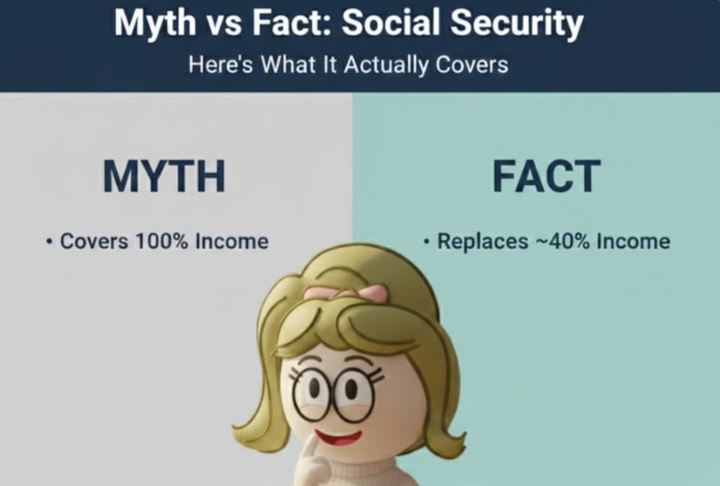
Focusing only on Social Security often leads to unnecessary anxiety. Many women worry about whether their benefit will be "enough" without considering how their other income sources fill the gap. When you zoom out and see the full picture, retirement usually looks stronger than it feels when you're only looking at one piece. For a clear framework on how all your income sources fit together, read what Social Security really covers.
Frequently Asked Questions
Should I delay Social Security and draw from savings first?
In many cases, delaying Social Security while using other income sources can increase your lifetime benefits. Each year you delay past full retirement age (up to 70), your benefit grows by about 8%. However, this strategy only works if you have enough savings to cover expenses in the meantime. An advisor can model whether this approach makes sense for your situation.
How do I coordinate Social Security with a pension?
If you have a pension, coordinate the start dates and amounts with your Social Security benefit. Some women choose to start their pension earlier and delay Social Security for a higher monthly amount. The right approach depends on your pension terms, your health, and your overall income needs.
What if I have multiple retirement accounts at different institutions?
Having accounts spread across multiple institutions makes coordination harder and can lead to inefficient withdrawals. Consolidating your accounts with one advisory team gives you a clearer picture of your total income and makes it easier to build a cohesive withdrawal strategy alongside Social Security.
Betty's Bottom Line
Social Security is one important piece of your retirement income, but it's not the whole puzzle. When you understand how it works alongside your other income sources, retirement planning becomes less overwhelming and more empowering. Look at the full picture, coordinate your pieces, and make decisions based on your complete plan. That's where real confidence lives.
Save This to Pinterest