How to Catch Up Without Overwhelm
Feeling behind on retirement savings? Small, steady adjustments after 55 can make a big difference. Here's how to catch up without overwhelm.

Can You Still Catch Up on Retirement Savings After 55?
Yes, and it doesn't require drastic action. There's a quiet thought many women over 55 carry: "I should be further along." Maybe you started saving later than planned. Maybe life happened, raising children, career pauses, caring for parents, divorce, or unexpected expenses. Whatever the reason, that feeling of being "behind" can sit heavily.
But being behind and being aware are two very different things. And awareness is powerful. "The women who come in feeling like they're behind are often surprised by how much runway they actually have," says Marc Frye, advisor at American Retirement Advisors. "A few smart adjustments at 55 or 60 can change the entire picture."
How Common Is It to Feel Behind on Retirement?
More common than you'd think. Many women step into their late 50s or early 60s realizing they don't fully understand their retirement income, wish they had saved more, or aren't sure if what they have will last. This is not failure. For decades, many women were not encouraged to take the lead in financial planning. Some relied on spouses. Some focused on family. Some simply were never taught how retirement income works. You are not alone in this, and you are not too late.
Does Catching Up Require Extreme Changes?
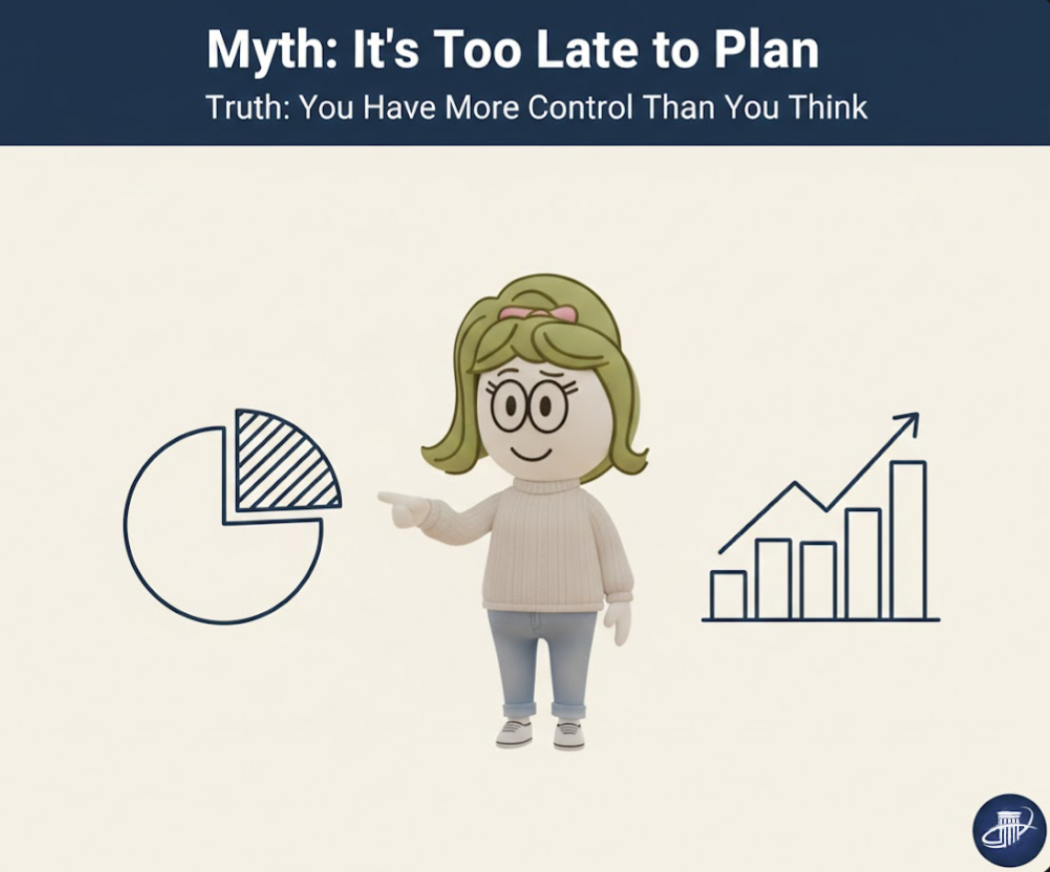
No. When people hear "catch up," they imagine extreme action: working 10 more years, cutting every expense, or taking major investment risks. But often, catching up is much quieter than that. It might look like adjusting your expected retirement age slightly, increasing savings modestly for a few years, reducing a few non-essential expenses, clarifying when to claim Social Security, or structuring income more efficiently.
Small adjustments over time create meaningful impact. Overwhelm usually comes from imagining massive change. Progress usually comes from steady refinement. If you're ready to take the first step, you're not behind, you're preparing.
What Can You Actually Control Right Now?
More than you might think. You can't change when you started saving. You can't redo financial decisions from 20 years ago. But you can control how clearly you understand your current position, how efficiently your income is structured, how realistic your lifestyle expectations are, and how often you review and adjust. Control reduces anxiety. Clarity reduces fear. Both are available right now.
What Is the Most Important Question to Ask Yourself?
Instead of "Why didn't I do more?" try asking "What is the smartest move from here?" That single shift can change everything. Retirement planning is not about perfection. It's about alignment, making sure your income, lifestyle, and long-term plan work together from this point forward. The ARA team has a great perspective on taking a fresh start approach no matter where you're beginning from. And for more on setting realistic, motivating goals, see how goals make the difference in retirement planning.
Frequently Asked Questions
What are catch-up contributions and who qualifies?
If you're 50 or older, the IRS lets you contribute extra to retirement accounts beyond the standard limits. For 2026, that means an additional $7,500 to a 401(k) and an extra $1,000 to an IRA. These catch-up contributions are one of the easiest ways to accelerate your savings in the years before retirement.
Is it too late to start a retirement plan at 60?
Not at all. While starting earlier gives you more time, women who begin planning at 60 can still build a strong foundation. Optimizing Social Security timing, consolidating scattered accounts, reducing unnecessary spending, and working with an advisor to structure income efficiently can all make a significant difference in just a few years.
How do I prioritize when everything feels urgent?
Start with the one thing that will give you the most clarity. For most women, that's understanding their income sources: what's guaranteed, what's flexible, and what the gap is. Once you see that picture clearly, the next steps usually reveal themselves naturally.
Betty's Bottom Line
If you're reading this, you're already doing something that matters: paying attention. Catching up on retirement doesn't mean punishing yourself for past decisions. It means making the smartest possible moves from right here, right now. A few steady adjustments, a clear view of your income, and a willingness to ask for help. That's all it takes. You're not behind. You're preparing. And a quick conversation with a trusted advisor can show you just how much runway you still have.
Save This to Pinterest