How to Feel Confident About Your Retirement Income
How to feel confident about your retirement income. Understand guaranteed vs. flexible income, close the gap, and build a plan that lasts.

What Actually Builds Retirement Income Confidence?
Confidence about retirement income comes from clarity, not from having the most money. At some point, almost every woman asks herself the same quiet question: "Is this enough?" Not just enough to survive, but enough to feel steady, secure, and free from constant worry. The answer isn't found by guessing. It's found by understanding exactly how your income works.
"Confidence isn't about the size of your portfolio," says Marc Frye, advisor at American Retirement Advisors. "It's about knowing which dollars are guaranteed, which are flexible, and having a strategy for both."
Is Retirement About Savings or Income?
Income. Many women focus on their retirement account balance, the total number. But retirement isn't about how much you've accumulated. It's about how that money turns into monthly income. In retirement, income is what supports your home, groceries, travel, hobbies, generosity, and peace of mind. The question shifts from "How much do I have?" to "How much can I safely use each month?" That shift is where confidence begins.
What Counts as Guaranteed Income?
Guaranteed income includes any source that pays you consistently regardless of what markets are doing. For most women, that's Social Security and possibly a pension or certain fixed income sources. This is your foundation. When your essential expenses are covered by guaranteed income, retirement immediately feels more secure. Everything above that becomes flexible, and that's an empowering place to be.
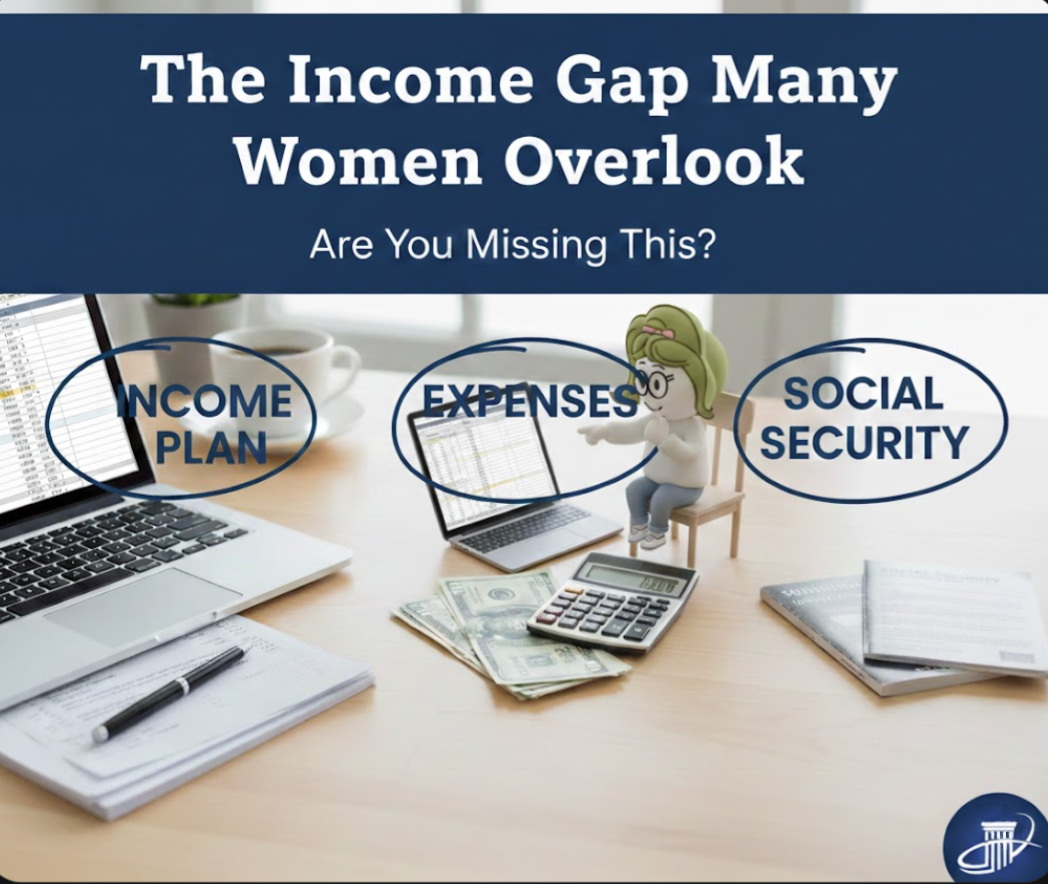
What Is the Income Gap Most Women Overlook?
Social Security alone typically doesn't replace a full working income. Many women discover there's a gap between what's guaranteed and what they actually want to spend. That gap isn't a crisis. It's simply something that needs a strategy. Your retirement accounts, investments, and savings are designed to fill that space, but how they're used matters. Too cautious, and you may restrict your lifestyle unnecessarily. Too aggressive, and you may feel uneasy during market shifts. Confidence comes from balance. For more on building a steady income stream, see what retirees really want from their income.
Why Does Longevity Matter for Women's Retirement Plans?
Women often live longer than men, which is a gift, but it also means retirement income may need to last 25 or even 30 years. Confidence isn't just about this year. It's about knowing your income strategy works long-term. That means accounting for inflation, healthcare changes, and the possibility that your needs will shift over time. A plan that adapts with you is worth more than a plan that looks perfect on day one. The readiness checklist at our retirement readiness checklist is a great starting point for building that long view.
How Often Should You Review Your Income Plan?
At least twice a year. Retirement isn't static. Markets move, expenses change, tax laws shift, and life evolves. A quick review every six months keeps you aware of where you stand without creating anxiety. And if something has changed, you can adjust early rather than scrambling later. The benefits of working with one team are well covered in this guide to consolidating with one advisory firm.
Frequently Asked Questions
How much retirement income do I need per month?
A common guideline is 70-80% of your pre-retirement income, but every woman's situation is different. Start by listing your essential monthly expenses (housing, food, insurance, utilities) and your desired lifestyle expenses (travel, hobbies, gifts). The total gives you a realistic income target that reflects your actual life, not a generic rule of thumb.
What if my Social Security isn't enough to cover my expenses?
That's common and not a cause for alarm. The gap between Social Security and your total expenses is filled by retirement accounts, investments, pensions, and other savings. A financial advisor can help you create a withdrawal strategy that makes your savings last while keeping your lifestyle comfortable.
Should I take Social Security early or wait?
It depends on your health, other income sources, and financial needs. Claiming at 62 gives you income sooner but at a permanently reduced rate. Waiting until 70 gives you the maximum monthly benefit. For many women, the right answer falls somewhere in between. An advisor can model different scenarios based on your specific situation.
Betty's Bottom Line
Retirement income confidence doesn't come from having the perfect portfolio. It comes from knowing which income is guaranteed, understanding the gap, and having a plan to fill it. Review your numbers twice a year, adjust when life changes, and give yourself credit for paying attention. You're doing the right work. And when you're ready for personalized guidance, a conversation with a trusted advisor can sharpen everything into focus.
Save This to Pinterest